
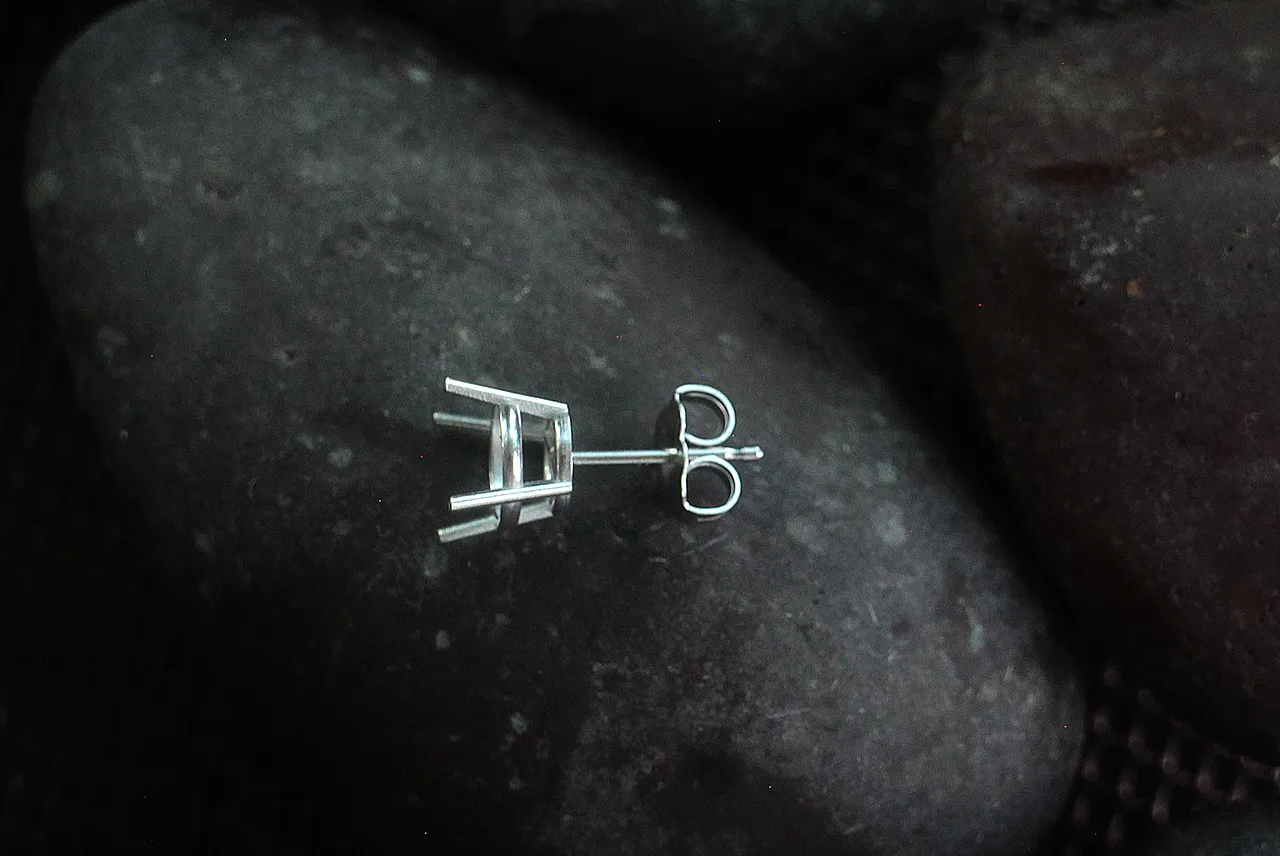
A four-prong head is among the smallest things a jewellery store buys, and among the most frequently ordered. It arrives in a paper packet, receives a stone, and disappears into a finished ring without anyone giving much thought to what it cost. Send that same 14kt head out to three suppliers for a quotation, however, and the three numbers that come back will differ by more than the packet is worth, with nothing in any of them to explain why.
The explanation lies in the unit. Findings are quoted by the piece, as a single price that folds the gold, the labour and the supplier’s margin into one figure. The convention is familiar, but it carries a consequence worth examining: when the unit of a quotation conceals the metal inside it, the buyer assumes the risk of every movement in the gold market without ever seeing that movement occur.
Quoting gold findings by weight, with the metal priced at today’s market and the making charge stated separately, removes that concealment. It is a modest amendment to an invoice and a considerable one to a purchasing budget.
Four things hiding inside one number
A fixed price per finding presents itself as a simple number, but it is an assembly of at least four. There is the metal, costed at whatever gold was trading at on the day the list was drawn up. There is the making charge, which covers the manufacturing. There is the supplier’s margin. And there is a buffer, wide enough that the list can stand for several months without requiring reissue every time the market shifts.
The buyer receives the total and nothing more. The weight of the piece is not disclosed, nor the gold price the quotation was struck against, nor the date on which it was struck. Absent those three figures, there is nothing to verify independently and nothing to set against a competing quotation on equal terms.
Two numbers instead of one
A weight-based quotation divides the price along the line where it naturally separates. The metal is calculated at the day’s market rate multiplied by the actual weight of the piece in the karat ordered, and the labour is stated on its own as a making charge.
Both halves can be checked. A bench scale settles the weight, the published market settles the metal, and what remains is the making charge, which is where the meaningful difference between suppliers actually lies. A jeweller who can see that figure is in a position to question it. A jeweller who cannot see it has nothing to question.
Weight-based pricing is not automatically a discount. On any given day, a per-gram quotation and a piece price may well land within pennies of each other. What separates them is that one can be audited and the other asks to be taken on trust.
Why a price list only ratchets upward
A price list is printed; the gold market is not. Because a fixed number must hold across months of movement, it is set with a buffer above the metal cost. When gold rises, that buffer is consumed, and the list is eventually reissued at a higher level. When gold eases, nothing compels a reissue, and so in practice the list remains where it is.
The effect over several cycles is a ratchet: a piece-price list tends to record every significant increase in the gold market and comparatively few of the decreases. Weight-based pricing has no buffer to widen, because the metal is priced on the day the order is placed and therefore moves in both directions with the market. Across a year of ordering, that asymmetry is the reason two benches purchasing identical volumes of identical findings can arrive at materially different metal costs without either of them understanding how.

The ticket with two units on it
There is a practical argument alongside the commercial one. Almost everything else crossing the bench is already costed by weight, since repairs, castings and scrap all settle in grams. Findings are commonly the exception, arriving as hardware priced by the piece.
The result is a single job ticket carrying two different units of measure, and the discrepancy between them is absorbed by whoever writes the ticket. On an individual repair the sum involved is small enough that nobody notices it. Across several hundred jobs in a year it is no longer small, and because it never appears as a line item, it is seldom investigated.
Where karat stops being a preference and starts being a cost
The difference between 10kt, 14kt and 18kt is a difference in gold content, and consequently a genuine difference in cost per gram. Quoted by weight, that difference is visible, and a jeweller can decide deliberately where the additional metal earns its place. Quoted by the piece, it is absorbed into a total that cannot be taken apart, and the cost of specifying a setting in 18kt rather than 14kt becomes an estimate rather than a figure.
On a single repair, the distinction is largely academic. Across a collection, it determines the margin. Metal content is one of the few variables a designer genuinely controls at the drawing stage, and it can only be managed deliberately if it can first be seen.

Three questions, one quarter, no change of supplier
None of this requires changing suppliers. It requires changing the question, and three are generally sufficient to put on the next request for quotation.
- What does this piece weigh, in the karat I am ordering? The answer lets the buyer compare quotations on equal terms.
- What gold price is this quotation based on, and on what date? The answer indicates how much market movement has already been priced in and how long ago.
- What is the making charge, stated separately? This is the figure that genuinely differs between suppliers, and it is the one a single piece price is best at obscuring.
Applied across a quarter of a store’s findings spend, those three questions make it easier to see where the metal ends and the labour begins.
How DIORO quotes gold findings by weight
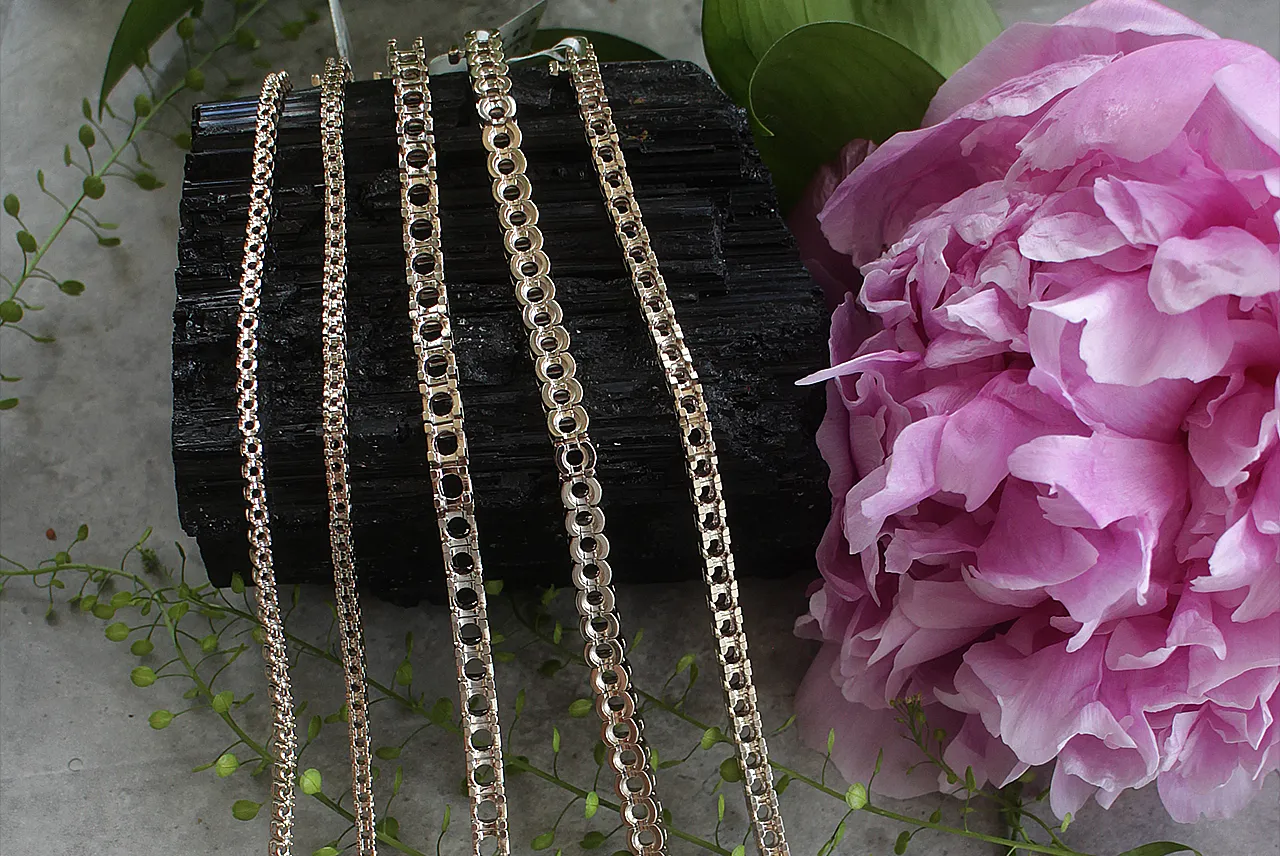
DIORO quotes findings by weight, with the metal priced at the day’s market and the making charge stated on its own, in 10kt, 14kt and 18kt yellow and white gold, alongside its gold chains, mountings and certified diamonds.
DIORO supplies approved trade customers exclusively. Retailers can request the current findings list or arrange a private showroom appointment.
Jewellers can bring a current supplier list to the Toronto showroom and compare it with DIORO’s weight-based quotation.
Want to compare the numbers? Request DIORO’s current findings list or arrange a private showroom appointment through the contact page.